


Referrals and insurance
Whether a referral is needed, which insurers you work with and what to bring, such as a claim or authorisation number. The answer is your policy, in your words.
A chatbot on your clinic's website that answers booking and insurance questions while your physiotherapists are with patients. Anything about pain or an injury goes to them.
Discuss your chatbot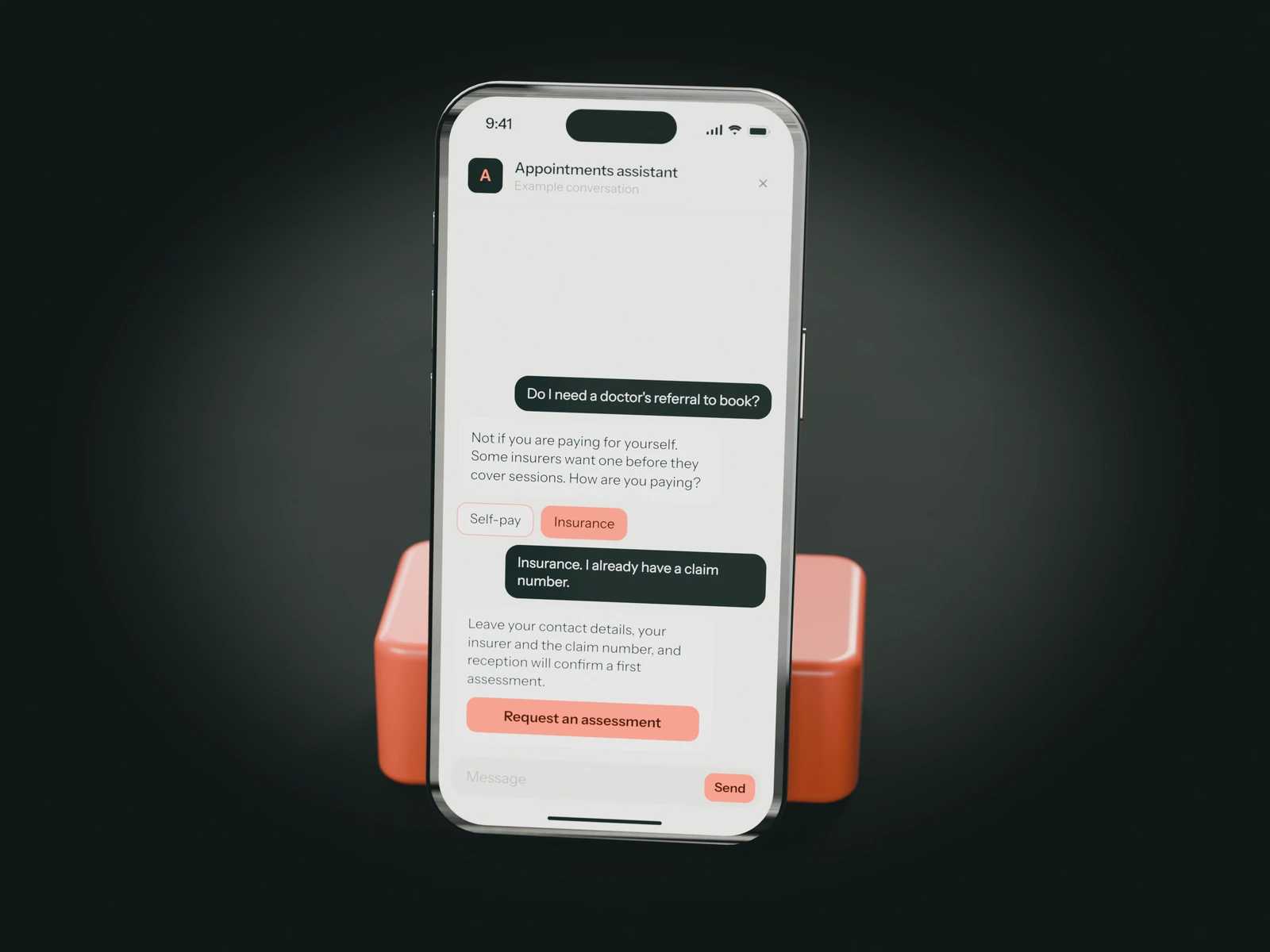
Do I need a referral, will my insurance pay, how long is the first appointment, what should I wear, do you treat sports injuries and can I see the same physio every time. In a small clinic, the physiotherapist often answers the phone between patients. The chatbot gives the answers you write down and stays out of anything clinical.
Reception hears these between sessions and on the voicemail after closing.
What it may say is written down before we build.
Whether a referral is needed, which insurers you work with and what to bring, such as a claim or authorisation number. The answer is your policy, in your words.
It asks how the patient is paying, what the visit is for in a few words and which days suit them. Reception or your booking system gets the request with contact details attached.
What happens at the first assessment, what to wear, where to park and the intake form to fill in beforehand, if you use one.
It explains your late cancellation policy and sends requests to move or cancel a session to reception or your booking system.
Which physio sees what, from your team list: sports injuries, pelvic health, post-operative rehab or neurological conditions. It also handles requests for a female physio or a particular language, and says which days that person works.
Clinical Pilates, back classes and group rehab: times, level, whether an assessment comes first and how to join. Places are confirmed by reception or your booking system, never promised in the chat.
Whether you offer home visits and in which areas, or video appointments, and what a patient needs for each. Requests go through marked home, video or clinic, with the area for home visits.
Wednesday, 9.15pm. A parent writes after their son hurt his ankle at football training, with a match on Saturday.
What your team gets. Reception gets a Friday request for a 15-year-old, self-pay, coming with a parent, flagged for a physio to call about the swelling and weight-bearing first. The whole conversation is attached, so nobody asks the parent to tell the story again.
It gives no clinical advice: it does not assess symptoms, read scan results, suggest exercises or say whether treatment will help. Those questions go to a physiotherapist, who sees the whole conversation. A sudden or severe problem gets your emergency instructions instead of a booking link.
Requests reach reception marked self-pay or insured, with the details to match.
Each request is written into your practice management software where its API allows, or sent to the reception inbox. We check what your system accepts before promising anything.
A reminder before each session and, when the physiotherapist has asked to see someone again, a prompt to book that follow-up.
Jobs that keep a course of treatment on track after the first assessment, each checked against what your clinic software allows before we promise it.
Using the session count in your clinic software, reception gets a note when an insured patient is close to the number of sessions their insurer authorised. Nobody finds out at the desk that the last one was not covered.
When a patient misses a session, a message asks them to rebook, and reception gets a note if your missed-appointment fee applies. A patient who misses twice goes to their physio, who decides what happens next.
If your physios use outcome questionnaires, they go out before the first assessment and at discharge, and the answers land in the patient's record or the physio's inbox. The chatbot never reads or comments on them.
When a place in a full class comes free, the next person on the waiting list gets a message. Where your booking system allows it, the first reply takes the place; otherwise reception confirms it.
When the physio marks a course finished, the patient gets a short note on how to rebook if the problem comes back and, later, a request for a review. The physio can skip the review request for anyone.
Most of it is admin that reception can pull together. The red flag list needs your senior physio.
Self-pay prices, the insurers you work with and what each needs, such as a referral or an authorisation number, plus how you handle solicitor and workers' compensation cases. A short list per payer is enough.
Each physio's areas, the days and sites they work, and anything patients ask for by name, such as a female physio or a language. The chatbot matches requests against it.
Assessment, follow-up, home visit, video and class, with their lengths and the names your booking system uses for them, so requests arrive as the right type.
The words and situations your senior physio wants treated as urgent, and the exact instruction for each. The chatbot uses the list as written and adds nothing to it.
The name of your clinic software, such as Cliniko, Jane, WebPT or TM3, and who manages it. We check what its API allows before we promise that requests arrive in the diary as the right appointment type.
A few weeks of emails, web forms and voicemail notes with names removed. We test the chatbot against them, including the awkward ones about pain that it must pass on.
Patients compare clinics on a phone, often while in pain, and the chatbot answers from the same pages. Our guide on getting more bookings from your website has more.
Pages for what people search, such as back pain, running injuries or pelvic health: what you assess, who sees it and how to book. They describe the service and promise no results.
Self-pay prices for assessments and follow-ups, the insurers you work with and what each needs before the first visit, so reception explains it less often.
Each physio with a photo, their special interests, the days they work and their registration, such as the HCPC in the UK or a state licence in the US, so patients can pick the right person.
Online booking that separates first assessments from follow-ups, so a new patient cannot book a short follow-up slot by mistake. If your clinic software supports it, follow-ups stay open only to existing patients.
Pilates and rehab classes with times, level, price and whether an assessment comes first. Where your booking system allows, the page shows live spaces, so nobody turns up to a full class.
If you have more than one clinic, a page for each site with its address, parking, hours and the physios who work there. People search by area, and the chatbot needs the same split.
Patients describe a lot in a booking chat: the injury, an operation, a long-term condition, the name of their insurer, sometimes their employer and a claim number. The chatbot asks only for contact details, how they are paying, a few words on the reason and the days that suit. The full history waits for the assessment or your intake form.
Injury and surgery details are health information. The rules are HIPAA in the US, for the practices it applies to, and the GDPR in Europe, which treats health data as a special category. Before launch we agree where conversations are kept and for how long, which staff can read them, and whether claim numbers are taken in the chat or at the clinic.
When someone books for another person, such as a parent for a teenager or an adult child for an elderly parent, the chatbot records who is booking and who the patient is. Reception calls the right person, and the record opens in the right name.
No. It answers practical questions about your clinic. Pain, injuries, exercises and whether treatment will help are for a physiotherapist, and the chatbot says so plainly.
It explains which insurers you work with and what patients need to bring. Whether a policy pays is between the patient and their insurer, so the chatbot never confirms cover.
The chatbot asks only for what a booking needs, such as a short reason for the visit. Before the build we agree where records are kept and which staff can open them.
It sends them to your booking system or takes a request for reception. Whether it can confirm a slot itself depends on your software, and we check that first.
Yes. The questions about referrals, insurance and appointments are much the same, and the chatbot uses your own terms, such as PT or plan of care.
It answers from the conditions on your website and your team list, in your words. If a condition is not listed, it does not guess: the question goes to reception or a physio, and the patient is told who will reply.
Your senior physio, in their own words. We bring the urgent-sounding questions from your past enquiries so they can decide how each should be handled. The chatbot uses the final list as written, and we test it with real wording before launch.
Yes, if the phone rings while you are with patients. Questions and requests wait in one inbox in the same format, and urgent messages get your instructions on screen straight away instead of a voicemail you hear at the end of the day. Our guide to the first automations to set up covers what to add next.
No. Exercises come from the physio, through the app or sheet they already use. The chatbot never repeats or explains them, because a wrong word about an exercise can hurt someone.
It explains your self-pay route in your words: prices, whether a referral is needed and, if you want it said, how soon you can usually see someone. It does not comment on their NHS care or advise whether to wait.
How you handle referrals, insurers and late cancellations is enough to start. The consultation is free, over Google Meet, a voice call or text.