


Repair requests
It asks for the address and unit, what is wrong and since when, a photo where your system takes uploads and when someone can get in. Maintenance gets a job it can assign without calling the tenant back.
A chatbot on your website that logs repair requests with the details a contractor needs and answers the routine questions tenants send at night.
Discuss your chatbot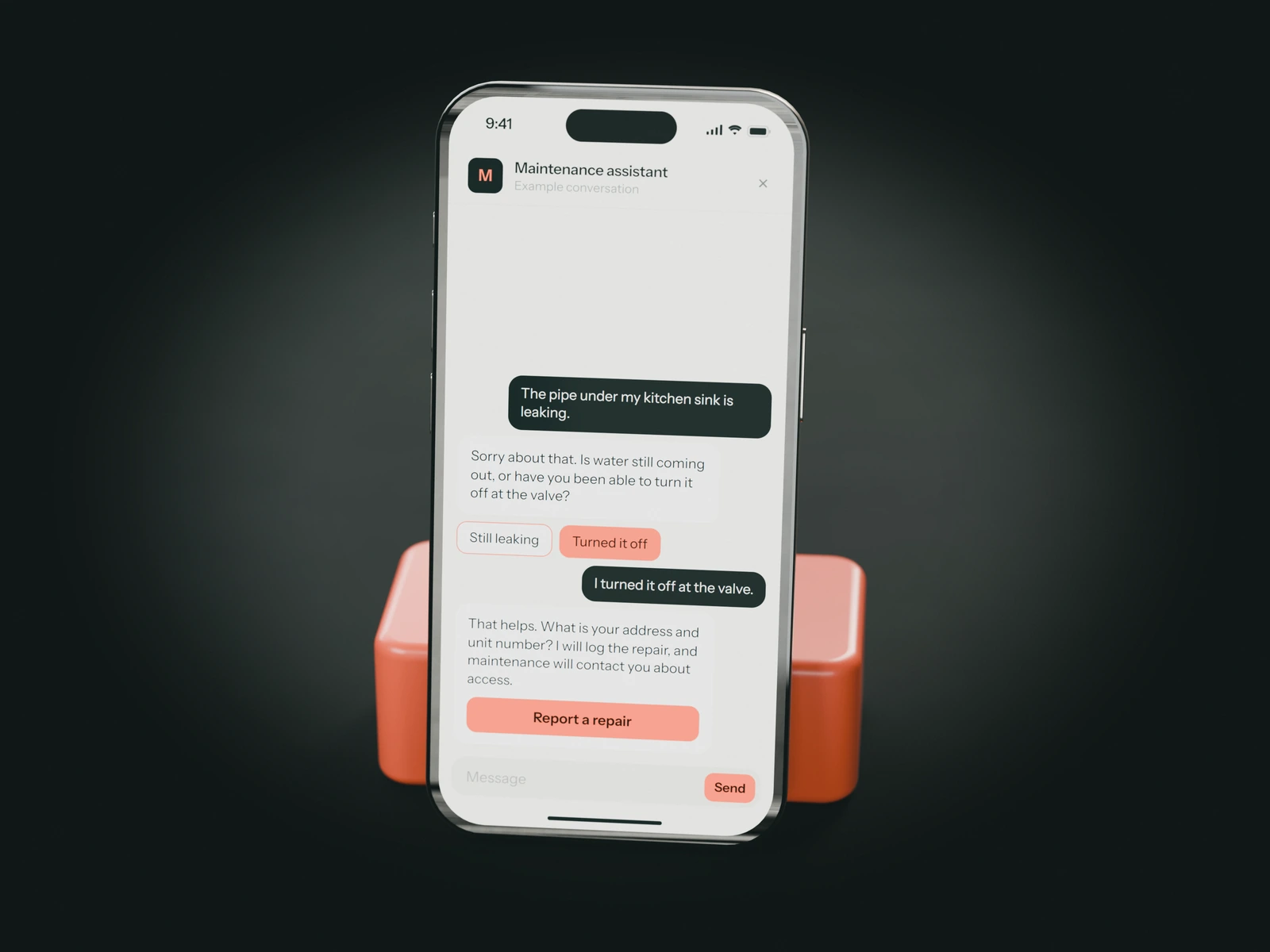
When is rent due, who do I call about the heating, can I have a cat, how do I renew my lease, when do I get my deposit back and what do you charge to manage my property. Your team answers these by phone and email all week. The chatbot works from your standard lease terms, house rules and fee pages.
The chatbot answers some from your policies and turns the rest into a repair job or a message for the right person.
What it may say is written down before we build.
It asks for the address and unit, what is wrong and since when, a photo where your system takes uploads and when someone can get in. Maintenance gets a job it can assign without calling the tenant back.
Burst pipes, no heat in winter, a gas smell or a lockout get your on-call number straight away, and the request goes to the top of the list.
Rent due dates, how to pay, lease renewals, notice periods and the move-out checklist, from your own policies. Late rent and disputes go to a person.
Owners looking for a manager are asked where the property is, what kind it is and whether it has tenants now. The enquiry goes to whoever signs up new owners.
Pets, decorating, a partner moving in or a lodger: it collects what the tenant wants to do and when, then sends the request to the property manager. The owner's decision goes back to the tenant from your team.
It records what happened, when and how often, and sends it to the property manager without taking sides. Each report is dated, so a pattern is easy to see.
Key collection, meter readings, setting up utilities and the check-in inventory, from the move-in pack for that building. New tenants get the steps that apply to them without calling the office.
A tenant writes on a Sunday evening. The mould in her flat is back for the third time, and she wants to know if she can stop paying rent until it is fixed.
What your team gets. Maintenance gets a damp and mould job marked as a repeat, with photos, two access mornings, key permission and the note about the cat. Dan gets the rent question as a separate flag, so it is not buried in a repair ticket.
It does not decide on applications, agree payment plans, promise a repair date or comment on deposit disputes. Every applicant and tenant gets the same answers from your written policies. Anything that needs a decision goes to your team with the tenant's messages attached.
Repairs arrive as jobs with the access details filled in and emergencies flagged.
Repair jobs are created in your property management software where its API allows. Otherwise they reach the maintenance inbox, one email per job.
A message to the tenant when a contractor is assigned, and a reminder to your team when a request has had no update.
These run next to the chatbot, from your property software where its API allows, and take over the chasing your team now does by phone.
A reminder before rent is due, a polite note when a payment is missed and a flag to your arrears contact after the step you set. Every message uses wording you approve, and none mentions fees unless you choose.
When a contractor marks a job done, the tenant gets a short message asking if the problem is fixed. A 'no' reopens the job and tells the property manager, with the tenant's reply attached.
When a quote is above the owner's approval limit, the owner gets it with an approve or decline reply. The contractor hears once there is an answer, and your team sees which jobs are still waiting.
Routine inspections and certificate renewals, such as gas and electrical safety checks, are tracked by date. Tenants get the access request in good time, and your team sees anything overdue.
When a tenant gives notice, they get the move-out checklist and a check-out appointment request, the owner gets the date, and the unit goes on your list to market.
Most of this already sits in your lease templates and property software. We ask for it in the form you keep it.
Your repair types, what counts as an emergency, the on-call rota and your out-of-hours contractors. A spreadsheet or your current procedure document is enough.
For each building: the property manager, parking, bike storage, waste collection and house rules. Never door codes or key safe codes, which stay out of the chatbot.
Your standard tenancy agreement, house rules and policies on pets, decorating and subletting, in the version tenants signed. Anything unusual in a particular lease goes to a person.
A test login for your software, such as AppFolio, Buildium or Arthur Online, so we can check what its API allows before promising repair jobs or tenant lookups.
Names for maintenance, arrears, owner enquiries and new lettings, by building or region, plus holiday cover, so each handover reaches a person instead of a shared inbox.
Your published management fees, what each service level includes and each owner's approval limit for repairs, so owner questions and approvals follow the contract.
Real emails and texts from tenants with names and flat numbers removed, complaints included. We test the chatbot on them before it goes live.
Tenants, applicants and owners come to your website for different things, and each needs a page that answers them.
A form that works on a phone, with photo upload and access times, and your emergency number above it. Tenants who prefer forms to chat create the same structured job.
What counts as an emergency, the first steps you approve, such as turning off the water, and your on-call number. Link it from every tenant email and the repair page.
Every step, document and criterion for applicants, published the same for everyone. Applicants read the rules before they apply, and the chatbot answers from the same page.
Each service level, what it includes, your published fees and a sample monthly statement, plus a form to request a rental appraisal from your team.
One page per building with parking, waste, bike storage and house rules, so tenants find answers on their own and the chatbot gives the same ones.
If your software has a tenant portal, a clear link to it on every page, so tenants know where to pay rent and download their documents.
Tenants share more than they realise: when the flat will be empty, where a spare key is, photos from inside their home, sometimes a health condition or a new baby. The chatbot asks only what a repair needs. Access times and key permission go into the job record, where only your team and the assigned contractor see them.
It asks for a close photo of the problem rather than the whole room, and photos go to the job in your software where it accepts them. Applicants' ID, payslips and references go through your referencing process, and owners' bank details through your own forms, never the chat.
Before launch we agree what is stored, for how long and who can read it, and old conversations are deleted on that schedule. In Europe the GDPR applies, and tenants can ask what you hold about them. Those requests go to the person you name.
It gives your on-call number at once, tells tenants to call the emergency services if anyone is in danger and flags the request for your team.
No. It explains how to apply and which documents you ask for, the same way for every applicant. Decisions stay with your team.
No. It explains how to pay and links to your payment portal. Card and bank details never go through the chat.
Yes. It answers from your listings and collects viewing requests for whoever shows the units, or offers times where your calendar allows.
Yes. It asks for the address first, so answers about parking, collection days and house rules match the right building.
Only when the visit date is in your property software and its API lets the chatbot read it. Otherwise it says the job is logged and your team will confirm the date, so it never guesses one.
No. Only the problems on your emergency list trigger the on-call alert. A dripping tap reported at 2am is logged and waits for the morning. Our guide on what a chatbot should hand over helps you draw that line.
It answers from your list of what the owner repairs and what the tenant handles, such as light bulbs or a sink they blocked. When it is unclear, it logs the job and your team decides.
Not about their account. The chatbot cannot check who it is talking to, so statements, payments and tenant details stay in your owner portal or with their account manager. It answers general questions about your services.
No. Where the tool's API allows, the chatbot creates jobs in it. If it cannot connect, it links to your tool's form or sends each job to the maintenance inbox, and you get an alert when a connection fails.
Yes. Leaseholders and homeowners ask about service charges or dues, meeting dates and permission for works. It answers from your published documents and sends approval requests to the manager or the board.
Tell us how tenants report repairs today and what counts as an emergency for you. The consultation is free, over Google Meet, a voice call or text.