


Services and opening hours
Which animals you see, your services, opening hours and out-of-hours arrangements, from your own information.
A chatbot on your clinic's website that takes appointment requests and sends anything urgent straight to your phone line.
Discuss your chatbot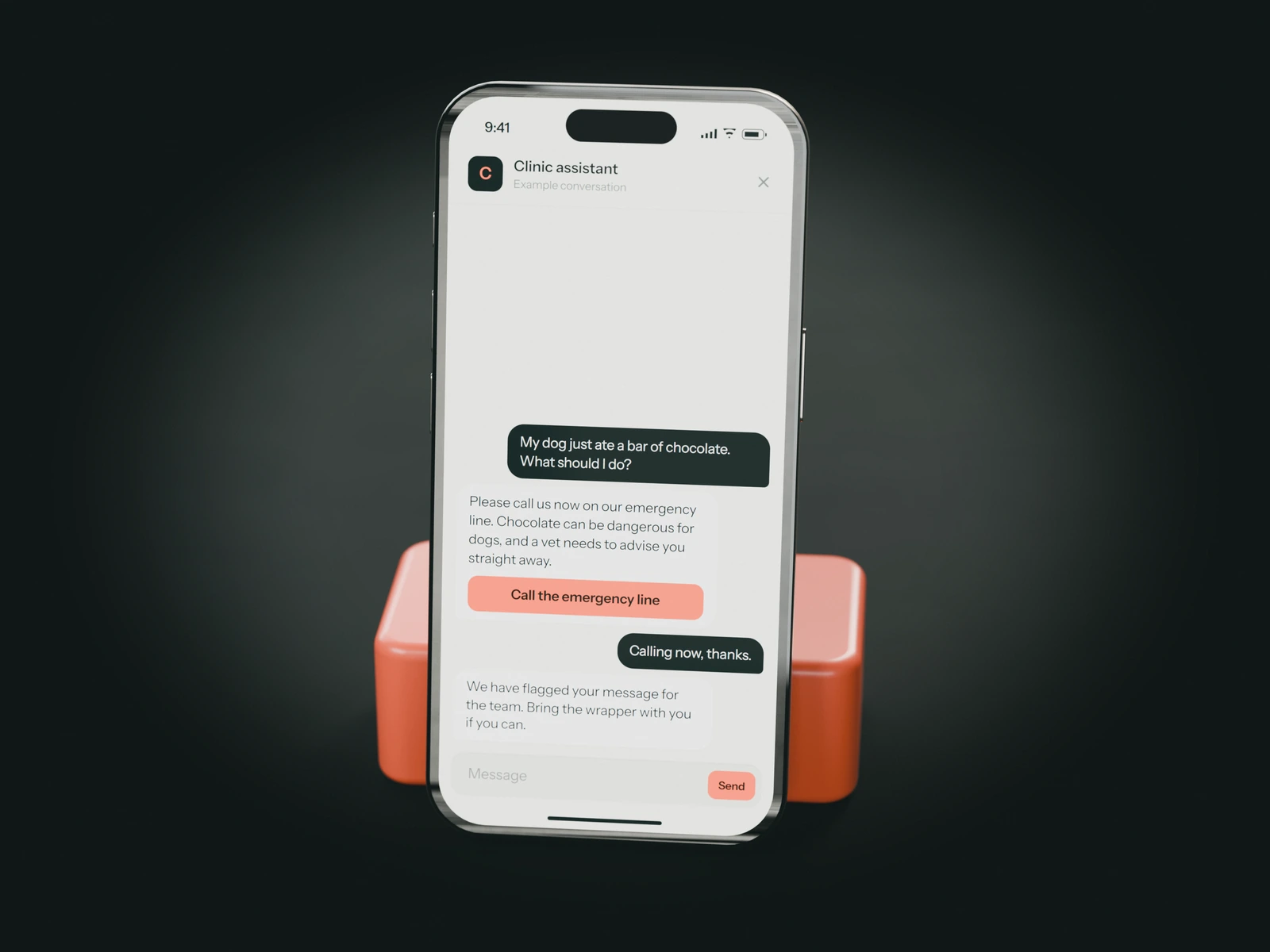
Are you open on Sunday, do you see rabbits, how much is a vaccination, can I get an appointment this week, what do I bring for a first visit and what should I do because my dog ate chocolate. Only the last one needs a vet, now.
Most can be answered from your website and price list, but the last group goes to a person every time.
What it may say is written down before we build.
Which animals you see, your services, opening hours and out-of-hours arrangements, from your own information.
It collects the owner's details, the pet, the reason and preferred times, and sends the request to your team or booking system.
Poisoning, injuries and breathing problems get your emergency number straight away instead of advice, and the conversation is flagged.
Registration forms, vaccination records to bring and payment options, so the first visit goes quickly.
Owners ordering repeat medication: the chatbot collects the pet's name, the medicine as written on the label and the branch they will collect from, then sends the request for a vet to approve. Whether a check is due first is for your vets to decide.
Whether you claim directly from insurers, what owners pay on the day, estimates for planned procedures from your price list and payment plans if you offer them. It never says whether an insurer will pay a claim.
Pet passports, health certificates and the appointments they need, from your own written guidance. Rules change by country and over time, so anything your guidance does not cover goes to the team instead of a guess.
Saturday afternoon, a few hours after a new puppy came home. The owner wants to register, book his vaccinations and ask a few things.
What your team gets. Reception has a new client registration and a Saturday morning request for Biscuit, a cocker spaniel puppy, with the walking question noted for the vet. The owner already has the health plan details.
It does not diagnose, suggest treatment or tell anyone to wait and see. Anything about a sick or injured animal gets your phone number, straight away.
Vaccination and check-up reminders go out on time.
Appointment requests reach your inbox or practice management software, where its API allows.
Vaccination and check-up reminders, sent with the owner's permission at the right time.
Jobs that keep reminders accurate and prescriptions moving without reception chasing each one, set up as workflow automation where your practice software does not do them already and its API allows.
Before booster and check-up reminders go out, the list is checked against the pets your team has marked as deceased or moved away, so a grieving owner does not get a reminder for a dog that died last month.
When a vet approves a repeat request, the owner gets a message that it is ready at the branch they chose, and a reminder if it is still waiting a few days later.
When an owner asks you to claim directly from their insurer, the claim form goes to them to complete their part, with a reminder until it comes back. Reception sees which claims are waiting on the owner.
After a neutering or other operation, a reminder to book the post-op check or stitch removal goes out at the interval your vets set, with a link to your written discharge notes.
When a new client registers, they get a message with what to bring and how to ask their previous vet for the pet's records. Reception gets a list of upcoming first appointments, so missing records are chased early.
Reception knows most of this by heart, but it needs writing down, branch by branch.
Which animals you see at each branch, which you refer elsewhere and the services each branch offers. A list is enough, as long as it names the less common species people ask about.
Your own out-of-hours service or the provider you use, how owners reach it and how to get there, and the emergency list your vets write. We use their exact words.
Your price list for consultations, vaccinations, neutering, microchips and nail clips, plus what your health plan includes. A PDF, a spreadsheet or your fees page is fine.
How repeats are ordered, how much notice you need, when a check-up is due before a repeat and what a written prescription costs. Your vets approve the wording.
The name of your practice software, such as ezyVet, Provet Cloud or Cornerstone, and who manages it. We check its API before promising that requests reach the right branch's diary.
Who takes complaints, inpatient updates, found animals and euthanasia calls at each branch, and their hours. A name and an inbox or phone line for each is enough.
A few weeks of emails, web forms and Facebook messages with names removed, worried ones included. We test the chatbot against them before launch.
Owners visit your website when something is new and when something is wrong. These pages cover both, and the chatbot answers from them.
What to do now, in opening hours and out of hours, with the out-of-hours address and how to get there, near the top on a phone. Owners read it with a sick animal on their lap.
How to register, how to move records from another vet, what to bring to the first visit and how your health plan works, so a new pet becomes a new client without a phone call.
A page for each group you see, such as rabbits, reptiles or small furries, naming the vets with an interest in them. Owners of less common pets search for a vet who knows their animal.
Prices for routine work, such as consultations, vaccinations, neutering and microchips, and what your health plan covers for its monthly fee. Owners compare these before they register.
How to order a repeat, how much notice you need, when a check-up is due first and when collections are ready. A clear page cuts the repeat calls reception takes.
A gentle page about euthanasia: whether you offer home visits, cremation options and how to arrange it, with your phone number. Owners may read it many times before they can face a phone call.
Owners type their name, address and phone number, their pet's history and sometimes their worries about a bill. The chatbot asks only for the owner's name and contact details, the pet's name and species, a few words on the reason and preferred times. It never asks for card details or insurance policy numbers in the chat.
A pet's medical record is not human health data, so HIPAA does not apply to it. It is still tied to a named owner, and the owner's details are personal data, which the GDPR covers in Europe. Before launch we agree where conversations are stored, for how long and who in each branch can read them.
Owners sometimes share hard things in a chat: money worries about treatment, a pet that is dying, a pet they can no longer keep. Those conversations go to named people only, and nothing from them is used in reminders or marketing.
It gives your emergency number or out-of-hours instructions straight away and flags the conversation. It never gives medical advice.
It collects requests for your team, or books directly where your practice software allows it.
Yes, with the owner's permission, through the automation behind it.
Yes, from your own price list, and it says when a price depends on an examination.
A few kind words you approve, your phone number and a person, never a booking form or a cheerful tone. Once your team marks the record, reminders for that pet stop. We test these messages with your team before launch, because getting them wrong is worse than saying nothing.
It gives the arrangements you write, including another provider's address and number if you use one. When the arrangement changes, for a bank holiday or a new rota, you update the information and the chatbot uses the new version from then on.
Yes. It asks which branch the owner uses, then answers with that branch's hours, vets and services. Requests, repeat prescriptions and collections go to the right branch, and each branch can have its own emergency instructions.
No card details are taken in the chat. It links to your own payment page, health plan sign-up or online shop. Estimates and payment plans for a sick animal stay with your team, who know the case.
Partly. Routine work fits well, such as vaccinations and requests for yard or farm visits, with the area and the number of animals collected. A sick animal still goes straight to the phone, which matters more when the vet on call is on the road.
A list of common questions and your emergency arrangements is enough to start. The consultation is free, over Google Meet, a voice call or text.